Hello world!

June 24th, 2009

Welcome!

Note:  My newest posts can always be found on this front page below, directly under the post How to Calculate Carbs: Useful Tools! 

Check back often, as I update my blog with recipes frequently.  :-D

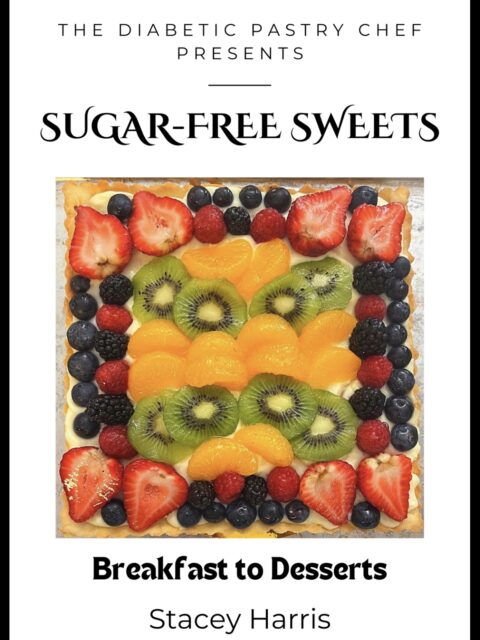
Breaking News: I have been offered a book contract for a book titled, “The Diabetic Pastry Chef”! The book is scheduled to be released in the fall of 2009 by Pelican Publishing.

THE July 2009 issue of The American Diabetes Association’s magazine, Diabetes Forecast, includes an article mentioning The Diabetic Pastry Chef :  http://forecast.diabetes.org/magazine/food-thought/how-sweet-it 

Also Announcing: my new sister site: Diabetic Pastry Chef Goes Organic !

Intro from The Diabetic Pastry Chef

June 23rd, 2009

I have something I’d like to share with you! Through trial and error, I have developed a formula I call Neo-Carb Baking, that produces tasty, healthy, homemade bakery products for diabetics. My techniques and formulas lessen (but not always eliminate!) sugar, “bad” carbs and saturated fats, while maintaining the satisfying tastes and flavors of your original recipes.

I posted my techniques, formulas and recipes on a diabetic Internet forum, where they became so well read and popular, I decided to devote an entire blog to my experiments and results. This is all in an effort to help other fellow diabetics learn to bake, enjoy and not fear eating delectable homemade bakery items. I promise to teach you how to bake products that not only you will enjoy, but your whole family will, as well.

The original thread that started it all is found here:

www.DiabetesForums.com/forum/recipes/18693-tips-diabetic-pastry-chef.html

I’d like to give special thanks to The Bayer Corporation, who stumbled upon my blog, and have offered to sponsor me to provide baking demonstration classes to the public!

I’d also like to give thanks to my additional sponsors and supporters: Healthcraft, Giant Eagle Marketplace, Chocolate Graphics (sugar-free chocolates) and Diabetic Cooking.

Here’s the Gist of What I Do…

June 22nd, 2009

I make my own low-carb flours, which I use to prepare pancakes, waffles and muffins. I keep the following on hand at all times: white flour, white whole wheat flour, whole wheat flour, soy flour, whole almonds and old-fashioned oats. I am continually adding new flours to my arsenal.

If I’m making muffins, I follow a traditional recipe that, for example, calls for 3 cups of flour. I look at my flours and might decide to mix 1 cup of white flour, 1 cup of whole wheat flour, and 1 cup of soy flour together. Occasionally, I use all whole wheat flour or any other mixture I prefer. I sometimes grind almonds to make almond flour or oats to make oat flour. I caution you not to use soy flour in your waffle or pancake batters, as it tends to stick too much to the griddles.

If a recipe calls for oil, I use canola oil. If a recipe calls for butter I will generally use canola butter or Smart Balance regular spread.

I purchase whole milk, and when baking (and elsewhere), I mix it with half water to make an approximate 2% milk. This cuts the carbs (as well as the price of the milk!) in half. There is no noticeable difference in taste from 2% milk.

I am not a big fan of putting artificial sweeteners in most baked goods as it alters the texture and flavors too much and makes things stick to the pan. When baking cakes or muffins, I prefer to reduce the amount of sugar rather than add all artificial sweetener or even a combination of sweetener and sugar. For instance, yesterday I baked a large batch of Amish Raisin Bran Muffins that called for 3 cups of sugar. The recipe makes six dozen muffins. I reduced the sugar to 1 cup of sugar with very satisfactory results.

I’ve discovered that a combination of half sugar and half Splenda works well in sweet potato and pumpkin pies. This also works well in baked bread and rice puddings (I use brown rice) and in baked custards. I also use half sugar and half Splenda when I bake pies such as apple, pineapple, peach and berry. These pies taste pretty much the same as if I had used all sugar.

So I basically mix my flours, use canola oil or a butter substitute, cut the milk carbs in half and reduce the sugar; or mix sugar and sweetener together (usually half and half). I do this with just about any standard recipe. The results are pretty much the same as the original recipe - and sometimes even better!

These recipes are not the final word. They are here to get you to think outside the box. To get you to experiment with the dessert recipes you come across, until you obtain a level of control that is comfortable to you, your health and taste buds. This can be achieved by portion monitoring, lowering the recipe ingredients that adversely affect your health, and by adding or substituting those that help. Use your own discretion and seek the advice of your licensed health care provider.

I am still experimenting; so from time to time, I will post further results. I’m committed to making superior low-carb products for me, my husband (who has also just been diagnosed with diabetes) and my family.

Why I Removed My Recipes From The Site

June 22nd, 2009

The other day, I posted a cheesecake recipe on a few diabetes sites, and the response was pretty typical of what I normally receive.  Here are some of the responses:

You should use a natural sweetener such as stevia instead of Splenda.

You should use more fat, try heavy cream in place of the whipped topping.

You’re using too much fat in the recipe.You should use fat- free sour cream and neufatchel chesse in place of the cream cheese.

You should use a different crust.

You should give carb counts etc.

Most people seemed pleased with the recipe however.  Still you see, you can’t please everyone; and thats because we are all dealing with our diets differently.  Some diabetics like high fat, low carb diets.  Others like low fat, low carb diets.  Some follow the exchange diet, or one of the many other diabetic diets. There are diabetics who won’t touch Splenda, others who are gluten-free etc.  I’m sure you get the point.  So I’ll reiterate what I’ve said numerous times before.  The recipes I post are my own personal recipes.  These recipes work well for my health and glucose readings.  My body may produce more or less insulin than yours. My cholesterol levels may differ from yours, as well as my taste buds.  When you’re dealing with diabetes, one recipe does not fit all.  You have to be able to tailor a recipe to your specific health, preferences and taste buds.  I removed most of the recipes from my site, because I felt as though some of you were confusing my recipes with my message.  You have to be able to take a recipe and make it your own. I’ve provided a formula, and many tips to help you accomplish this.  I pray you never look at a recipe again and think, I can’t make that, it has too much sugar, too many carbs, too much fat, it contains white flour or wheat etc.  My formula should enable you  to pick up any cookbook or go to any baking site, and convert most any dessert recipe to a diabetic-friendly version you are able to eat and enjoy without worry. 

The basis of my formula consists of 4 parts.  Change or mix the flours, lessen the sugar, dilute whole milk with half water, and use a healthier fat such as canola oil.  These 4 steps should be enough to adequately convert most of the dessert recipes you come across, but if not, I provide a host of additional tips that can be utilized to lower the carbs and or fat even further. Trust me, you don’t have to be limited in the desserts you can eat and enjoy, as long as you successfully make the recipe your own.           

Carb Counting?

June 4th, 2009

A meal planning technique many diabetics use for managing their blood glucose levels is known as carb counting.  Carb counting should take into effect how active you are, and what, if any medications you are taking.  Generally a diabetic should start with 45 to 60 grams of carbs per meal and adjust this to their health.  Food labels and carb counters can be relied on for help in carb counting.  To further lower the carbs in my recipes, or in your own, you might choose to use a mixture of some of the lower carb flours such as coconut flour, almond flour,  flaxseed flour, soy flour or oat flour.

Spiced Tea

April 20th, 2009

8 tea bags
4 quarts water
2 oranges, washed and quartered
1 1/3 c Splenda
ground cinnamon
ground nutmeg
ground cloves

Steep teabags in boiling water and cool. Add to pitcher. By hand squeeze the juice from the oranges into the pitcher. Drop the squeezed quarters into the pitcher. Stir in the Splenda and add cinnamon, nutmeg and cloves to taste. Stir and chill.

Note: Lemons can be substituted for the oranges, or a combination of orange and lemon can be added. Yield: 1 gallon.

Mexican Hot Chocolate

April 19th, 2009

1/2 square unsweetened chocolate
2 tsps Splenda
1/4 tsp ground cinnamon
1 c milk

Place all ingredients in top of double boiler and heat until chocolate melts. Whip vigorously untl a good foam forms on top. Top with whipped cream and an additional sprinkle of cinnamon.

Egg Substitutions

November 28th, 2008

In baking, you may use a heaping Tablespoon of soy flour and a Tablespoon of water to equal one egg. Once baked, there is no texture or taste difference.

1 large egg = 1 1/2 large egg whites

1 large egg = 3 Tablespoons egg substitute

1 large egg white = 2 Tablespoons egg substitute

1 large egg white plus 2 teaspoons canola oil = 1 egg (to reduce the cholesterol)

I will occasionally substitute “some” of the whole eggs in a recipe with soy flour or egg whites.  I consider this when a recipe calls for more than 2 eggs.

Size Matters

November 28th, 2008

Portion size, that is. If you’ve ever found yourself baking a cake or pie and devouring it all in a few sittings this tip is for you. Think portion size. Don’t bake a cake, bake cupcakes or bake your pound cake batter in mini cake pans.  Eat one and freeze the remainder of the individual portions. Don’t bake a pie, bake small tarts. Portion puddings and ice cream into ramekins. One or two cookies is a portion size. Freeze the rest. Once you’ve had your portion for the day, thats it.

Canola Butter Or Olive Butter

November 28th, 2008

2 c butter, softened
1 1/2 c canola oil or olive oil

Whip butter with electric mixer.  Add and beat canola oil or olive oil. Pour into container and refrigerate until hardened. Keep refrigerated.

I use this as a healthy spread for my quick breads such as biscuits, waffles and muffins. Also to butter my vegetables. Use anywhere you would use butter or margarine. Works well in most recipes that call for butter, margarine or Smart Balance spread.